High alpine slopes of Mount Kilimanjaro
6-Day Climb · Full-Board Camping

6-Day Rongai Route Kilimanjaro Climb— The Quiet Trail From the North

6-Day Rongai Route Kilimanjaro Climb · 6 Days / 5 Nights on the Northern Approach

6 Days / 5 Nights Full-Board Camping Moderate Remote & Quiet June–October
Duration
6 Days / 5 Nights
Route
Rongai → Saddle → Marangu
Accommodation
Tents & Mountain Huts
Difficulty
Moderate
Summit
Uhuru Peak 5,895 m
Best Time
Jun–Oct & Dec–Mar
Route Overview

An Authentic Northern Approach

The Rongai Route approaches Kilimanjaro from the remote north-east, far from the crowded western trails. Your first day climbs through cool, quiet pine forest — a landscape most climbers never see — before the vegetation thins and the views open across the barren saddle between Mawenzi and Kibo.

Because the northern side receives less rain, Rongai is the most reliable route to climb during the wet seasons, when other trails turn steep, muddy and slippery. It is also one of the least commercialized routes on the mountain, offering a genuine, old-school Kilimanjaro expedition feel.

The final ascent follows the same classic eastern path used for over a century: a midnight start from Kibo Hut, a steady grind across the scree to Gilman's Point on the crater rim, then a breathtaking traverse to Uhuru Peak (5,895 m) just in time for sunrise.

Descent is along the Marangu (hut) trail, giving you two completely different sides of the mountain in a single expedition — and a last night of comfort in the famous mountain huts before returning to Arusha or Moshi.

Dawn over the barren saddle between Mawenzi and Kibo on the Rongai Route
Highlights

Why Trekkers Choose the Rongai Route

Itinerary

Day-by-Day Itinerary

Tap each day to expand the full plan, elevations and photos.

Trekkers entering the quiet pine forest at the start of the Rongai Route
Elevation
1,950 m → 2,625 m
Trekking
~4 hours, ~9 km through pine forest
Wildlife
Possible elephant & buffalo signs in the early morning
Accommodation
Simba Camp
Meals
Lunch & dinner
Alpine moorland on the Rongai Route with the mountain ahead
Elevation
2,625 m → 3,630 m
Trekking
~5 hours, ~8 km through alpine moorland
Views
First sighting of Mawenzi's sheer cliffs
Accommodation
Kikelewa Cave Camp
Meals
Breakfast, lunch & dinner
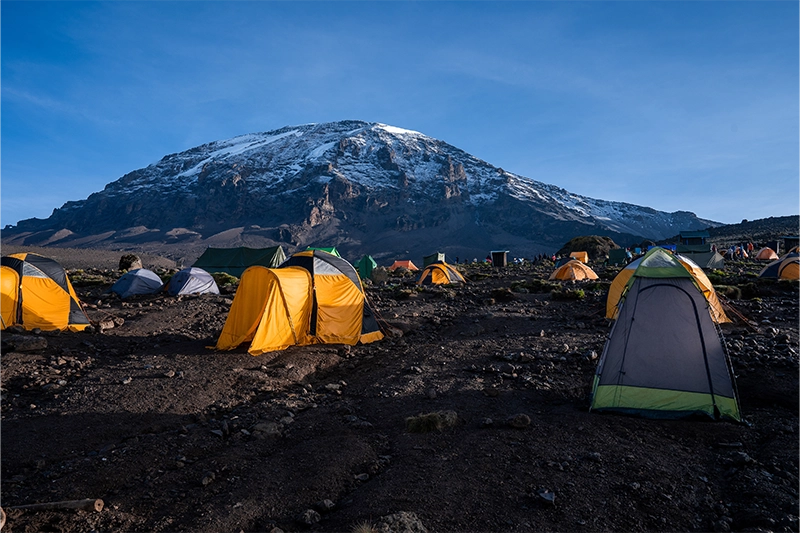
Camping tents in the alpine desert of Kilimanjaro
Elevation
3,630 m → 4,330 m
Trekking
~4 hours, ~5 km into the high desert
Afternoon
Acclimatization walk toward Mawenzi Ridge (4,700 m)
Accommodation
Mawenzi Tarn Camp
Meals
Breakfast, lunch & dinner
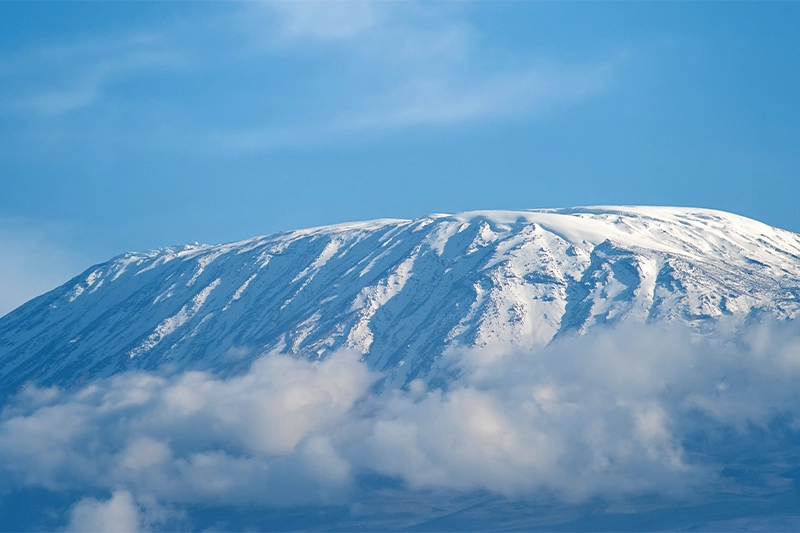
High alpine slopes of Mount Kilimanjaro
Elevation
4,330 m → 4,703 m
Trekking
~4–5 hours, ~9 km across the barren saddle
Views
Mawenzi and Kibo towering overhead
Accommodation
Kibo Hut (dormitory)
Meals
Breakfast, lunch & early dinner
Sunrise at Uhuru Peak on Mount Kilimanjaro
Elevation
4,703 m → 5,895 m → 3,720 m
Trekking
Start ~23:00 via Gilman's Point; sunrise at Uhuru; descend to Horombo
Accommodation
Horombo Hut (dormitory)
Meals
Breakfast at summit, lunch & dinner
Golden afternoon light over the forested descent to Marangu Gate
Elevation
3,720 m → 1,870 m
Trekking
~5–6 hours, ~18 km back through rainforest
Celebration
Summit certificate at Marangu Gate
Transfer
Return drive to Arusha or Moshi
Meals
Breakfast & lunch

Included

  • Kilimanjaro national park & hut/camping fees
  • Full-board meals plus daily tea, coffee & water
  • Dome tents & sleeping mats on ascent; mountain-hut nights on descent
  • Sleeping bag
  • Experienced, certified guides, porters & cook
  • All airport & park transfers in private vehicles
  • Pre & post-climb Arusha/Moshi hotel nights
  • Oxygen cylinder & pulse oximeter on summit night
  • Summit certificate on successful ascent

Excluded

  • International flights & visa fees
  • Travel & medical insurance (compulsory)
  • Personal trekking gear (rentals available)
  • Gratuities for guides, porters & crew
  • Alcoholic & soft drinks outside provided meals
  • Personal expenses & souvenirs

Featured Experiences

Northern pine forest Mawenzi Tarn The great saddle Gilman's Point sunrise Marangu hut descent

Climbing Tips

The dry northern approach makes Rongai your best wet-season option — but still pack full waterproofs. Layer up for the exposed saddle crossing, and take your time on the midnight summit push; slow and steady is the fastest way to the top.

Best Time

When to Climb

The Rongai Route is the driest option on the mountain and climbs well in most months. June–October and December–March remain the clearest windows, while April–May and November are when Rongai truly earns its reputation as the reliable choice.

Ideal For

Who Should Take This Route

Rongai suits trekkers who want a quieter, more authentic Kilimanjaro without sacrificing comfort — and climbers booking in the wet season who need a dependable, dry trail beneath their feet.

FAQ

Good to Know

Rongai's northern position receives less rainfall than the western and southern trails, making it the most dependable route to climb during the rainy seasons.

It descends along the Marangu trail, so you experience two different routes — the quiet northern approach and the classic eastern descent with its mountain huts.

The ascent camps use comfortable dome tents, while the descent from summit night uses the Kibo and Horombo mountain huts.

Reserve Your Climb

Book the 6-Day Rongai Route Kilimanjaro Climb

Your Kilimanjaro adventure begins with a single conversation. Share your preferred dates, group size and fitness level, and our climbing specialists will send a free, no-obligation itinerary and quote within 24 hours — including optional safari and Zanzibar extensions to complete your Tanzanian journey.

Please enter your name.

Please enter a valid email.

Please enter your phone number.

Please choose a date.

Please select the number of trekkers.